
The Trees Never Flinched - Part 1

Updated: Sep 7
Post 1 of a new series: Held by Something Older Some of us learned very young to read a room before we walked into it. A shift in tone. A held breath. A door closing a little too hard. If you grew up like this, your body became fluent in a language most people never had to learn — the language of watching to stay safe. But some of us also found a different kind of safety long before we ever learned to navigate people at all.
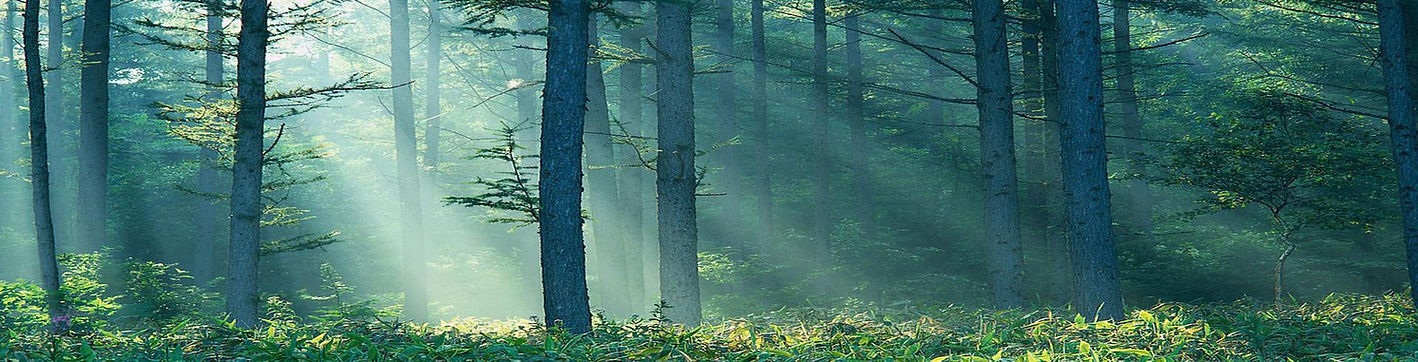
I found mine in the woods behind my childhood house. I spent hours back there as a kid, and even though I couldn’t have explained it at the time, I could feel something old and peaceful in that land — something that had been quietly there long before me, and seemed to wrap around me like company I didn’t have to ask twice for. I didn’t have words for it then. I just knew I felt less alone there than almost anywhere else. Maybe your version of this was a backyard. A creek. A stand of trees at the edge of a field. Somewhere you could exhale, because nothing there was going to change on you without warning.
The trees never flinched. The ground never turned cold. The quiet never had an edge to it. This is not a small thing. For a nervous system that learned early to brace, a place that simply — steadily — stays the same is not just pleasant. It’s medicine, and often it’s where trust starts to rebuild first, long before it feels safe to rebuild trust with people. Why nature feels safer than people, sometimesIf your early relationships were unpredictable, your body may have learned that connection itself is risky — that closeness can turn without notice. Nature doesn’t ask you to manage its moods. A river doesn’t need you to read it correctly or perform calm to keep the peace. It simply is, over and over, the same river.
That kind of reliability is what let something in me finally soften as a kid, long before I understood why. Many of us found that steadiness in the natural world long before we had words for what we were missing at home.
If you had a place like that — a tree, a trail, a patch of woods that felt like it was quietly on your side — you already know something important about your own healing. You found it yourself, before anyone taught you how. A small practice: Find Your Steady ThingThis takes about five minutes, and you can do it anywhere — a window, a backyard, a park bench. 1. Find something natural and steady in view — a tree, a patch of sky, a stone, moving water. 2. Let your eyes rest on it, without needing to do anything else. 3. Ask quietly, “Has this been here longer than my hard moments?” Let the answer be simple: yes. 4. Notice one thing your body does in response — a breath that drops lower, shoulders that ease, a slight loosening in the chest. 5. Before you look away, say silently: thank you for staying the same.
That’s the whole practice. You’re not trying to feel anything in particular. You’re just letting your body register, for a few minutes, what it’s like to be near something that doesn’t need managing. Where we’re headedThis is the first stop in a short series about the kinds of steadiness many of us found outside of people — in nature, in childhood companions, in a sense of ancestry, in something wiser than our own fear — and how those early, unexpected sources of safety can become doorways to deeper healing now. If this one felt familiar, the next few posts will go further, into territory most of us were never quite given permission to talk about out loud.
If reading this stirred something — a memory of a place, a longing for that kind of steadiness again — that’s worth paying attention to. It might be the start of a conversation, or a session, whenever you’re ready.
With Love and Light, Deanne  |


Comments